₹628.05 cr worldwide gross through October 23
The Times of India · updated 24 Oct 2026. Cites Sacnilk: India gross ₹408.55 cr + overseas ₹219.50 cr. Trade estimates, subject to revision; no automated feed connected.
Some actors sell tickets.
Rajinikanth turns a release into a ritual.
₹300 crore estimated budget. ₹628 crore at the worldwide box office so far. Start with Jailer 2, then follow the ripple effects. Budget assumed; gross reported through October 23.
This is a gross-minus-spend illustration, not a producer P&L, cash balance or investment return. The dashed segment assumes production spending rises evenly from zero at announcement to the selected budget on the eve of release. Neither the allocation date nor actual payment schedule is public; announcement is simply our model origin. Costs before announcement are not reconstructed.
After release, we subtract the assumed full production budget from cumulative worldwide ticket gross. The zero line therefore means gross equals modelled spend—not producer break-even. Theatre shares, taxes, distribution terms, marketing, financing, streaming revenue and talent participation are excluded. The advanced model treats some of these separately.
Both views use true calendar spacing. All points use the same ₹95/$ conversion in dollar view. Latest observation: October 23; checked October 24, 2026. There is no fabricated October 24 value or live feed.
| Date | Day | Gross | Source |
|---|---|---|---|
| 15 Oct 2026 | 1 | ₹127.25 | Report ↗ |
| 18 Oct 2026 | 4 | ₹418.25 | Report ↗ |
| 20 Oct 2026 | 6 | ₹541.45 | Report ↗ |
| 21 Oct 2026 | 7 | ₹580.95 | Report ↗ |
| 22 Oct 2026 | 8 | ₹606.05 | Report ↗ |
| 23 Oct 2026 | 9 | ₹628.05 | Report ↗ |
We use Sacnilk’s revised Day 1 and Day 4 figures (₹127.25 cr and ₹418.25 cr), which differ from early media reports. Connecting lines show direction between observations, not a verified daily series.
Production milestones: Sun Pictures’ announcement · start of filming.
Worldwide gross ÷ estimated production budget
LATEST CHECKED TALLY · 24 Oct 2026
Reported by The Times of India, citing Sacnilk. Figures can be revised. This is a dated snapshot, not an automatic live feed.
1 crore = 10 million rupees. Dollars use a common ₹95/$ reference rate here so the comparison stays simple. This is a gross-to-budget multiple, not producer ROI: ticket revenue is shared with cinemas, distributors and tax authorities. Explore the economics ↓
Now imagine the stadium erupts every time one man appears on screen.
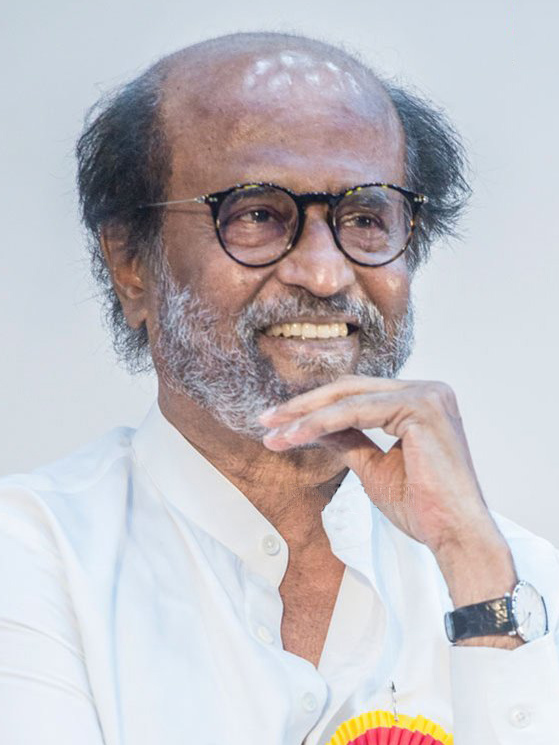
That gets you closer to Rajinikanth. A giant of Tamil cinema, known to fans as Thalaiva—“leader”—whose screen presence turns a film into a shared occasion.
The “Chuck Norris of India” comparison catches the larger-than-life mythology. It misses the rituals, the community, and the joy. Fans decorate towering cutouts. A cinema becomes a gathering place. A release becomes a celebration. [1]
Aditya Nirvaan Ranganathan reports that his Apple spellcheck still underlines “Rajinikanth.” A tiny red squiggle for a towering cultural presence. Spellcheck behavior varies by device and language settings; the spelling here is Rajinikanth, or Rajini.
“For the first half hour of the movie, whenever he showed up on screen, most of the guys in the audience would get up, twist their shirts, and just go insane.”
I remember a towering cutout of Rajini as the robot outside the theatre—what felt like fifty feet of superstar. Inside, I’d never seen an audience like it. Rajini-nomics begins with that feeling, and a question: how do you measure a phenomenon?
The Indian Express reported huge Rajinikanth cutouts and crowds at Arora theatre in Matunga on October 1, 2010. That supports the setting and atmosphere; it does not establish the exact theatre, screening or cutout height in Aditya Nirvaan Ranganathan’s recollection. Read the 2010 report ↗
ILLUSTRATIVE SCENARIOS · NOT FORECASTS
Includes fixed talent fees; excludes the extras below.
Assumed additional producer costs; avoid counting them twice if already in a quoted budget.
Streaming 160 + Telugu 45 + Hindi 15 (₹ cr). Hindi uses the reported lower bound. [4–6]
Assumed other territories, external rights and overages. Excludes the three packages above and internal rights valuations.
Hypothetical talent participation. The actual percentage and contract waterfall are unknown.
Tickets pay taxes, cinemas and distributors too. When a producer sells a territory’s rights, we count that deal—not the same territory’s full box office again.
ROI and the break-even threshold stay on an INR basis, even in dollar view. Dollar profit can differ under lifecycle FX. ROI uses INR profit divided by INR total cost, including participation. It is a simple project return, not annualized IRR or return on peak equity invested. Taxes and the timing of cash receipts are not modelled.
For a rough lifecycle view, split the production spend into phases and convert each slice at its phase rate. Convert marketing and receipts at the release rate. These starting rates and weights are illustrative assumptions, not measured historical averages.
For USD values in millions: INR crore × 10 ÷ rate. Snapshot figures use the release/reference rate; only the lab’s production spend is phased. No inflation adjustment. Real payment dates would improve this estimate.
A film’s balance sheet is one story. The spending around it is another. The value of belonging may never fit in a spreadsheet.
Performers. Technicians. Sets. Visual effects. Distribution. Cinemas. A star-led film organizes work across many businesses.
Our next research step: separate wages, purchases and profits. Salaries are already inside production costs; adding them again would exaggerate the total.
NEXT TO MEASURE: SPEND BY CATEGORY + TERRITORYA map of activity, not three numbers to add together.
Try a hypothetical audience’s spending around a release. The key question: how much is genuinely additional, rather than money they would have spent elsewhere?
Gross spending includes supplier costs. Measuring economic value added needs margins, local sourcing and displacement evidence. No multiplier is applied here, and none of this is yet attributable specifically to Rajinikanth.
A family memory. A Tamil community gathering far from home. A cheer shared with strangers. These are part of the phenomenon, even when they don’t become revenue.
Fan celebrations abroad were documented around Enthiran too. But a record of enthusiasm is not a causal estimate of tourism, trade or economic growth. Read the 2010 account ↗
How much of this happens because of Rajinikanth? To answer that, we’ll need comparisons—not just bigger totals. Franchise strength, directors, music, release timing and alternative entertainment all matter.
Every number has a provenance. A repeated estimate is still an estimate. Here is what we know, what we assume, and what we still need.
The Times of India · updated 24 Oct 2026. Cites Sacnilk: India gross ₹408.55 cr + overseas ₹219.50 cr. Trade estimates, subject to revision; no automated feed connected.
Indian Express · 1 Oct 2010. Reports crowds and cutouts at Arora, Matunga. Author recollection is separate evidence.
Filmibeat Tamil · 9 Oct 2026; repeated by TOI on 11 Oct. Unnamed-source reporting, not independent confirmations.
Koimoi · Oct 2026. A reported budget with no disclosed cost statement. Retained as an upper scenario, not reconciled fact.
Bollywood Hungama · 18 Aug 2026. Attributed to an unnamed source. Price, payment timing and conditions unverified.
Deccan Chronicle · 26 Sep 2026. Source-based report of the Andhra Pradesh / Telangana deal; not a disclosed contract.
Bollywood Hungama · 3 Oct 2026. The model uses ₹15 cr as a lower-bound approximation; settlement is unknown.
Working scenario: ₹300 cr production + ₹30 cr extras; ₹180 cr additional receipts; 20% participation. These are editable assumptions, not reported results.
Default ₹95/$ is a rounded reference assumption. Lifecycle rates ₹85/90/95 and 20/60/20 spend weights are illustrative, not historical averages.